What is the difference between grey and white fittings?
+
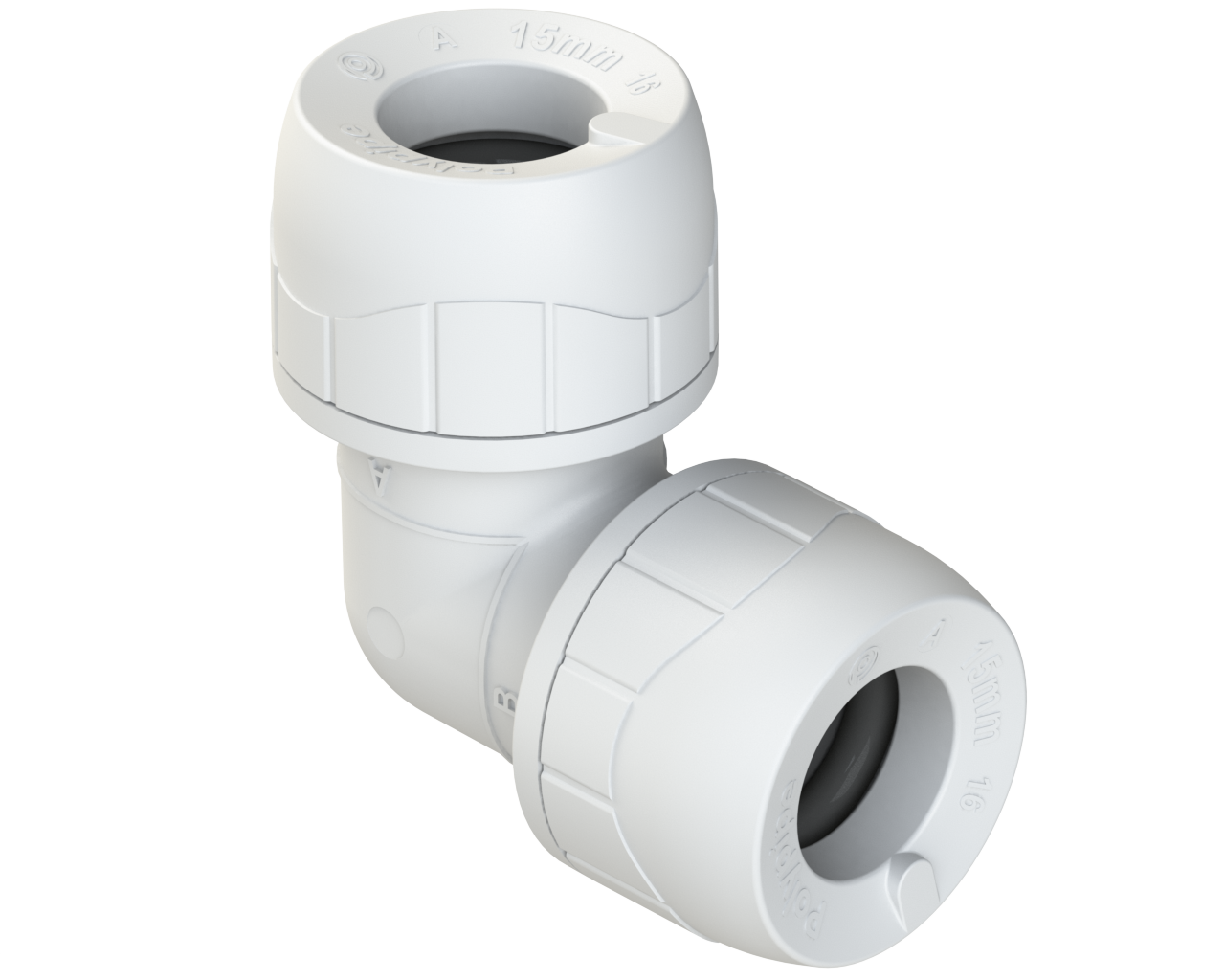
Other than the colour, none! The grey and white PolyPlumb® Enhanced fittings are manufactured to the same standard (BS 7291 Parts 1, 2 & 3), offer the same 50-year guarantee, and are manufactured to the same tolerances and dimensions.
Are PolyPlumb® Enhanced fittings compatible with copper pipe?
+
PolyPlumb® Enhanced fittings are compatible with copper pipe. When using copper pipe with these fittings, ensure a clean cut by using a rotary or wheel cutter. Deburr the cut end before inserting the pipe into the fitting. Please note: PolyPlumb® Enhanced In-Cert® technology is not compatible with copper pipe installations i.e. you will not feel the haptic click if you twist the pipe within the fitting.
What are the standard protocols for pressure testing PolyPlumb® Enhanced installations?
+
Pressure testing of pipe systems is essential. However, a successful pressure test using the following steps is not a guarantee of complete and correct installation and only ensures that pipes have been inserted into fittings passed both the ‘O’ ring and the grab ring. If pipes are scored or scratched during the installation process this could lead to weeps which may not be highlighted with a high-pressure test alone. Pipe and fittings only should be tested, any parts of the system not designed to take these pressures should be isolated from the test.
The system should be completely filled using water at an ambient temperature, ensuring all air is expelled from the system.
Pressure testing should be carried out as follows:
1. A low-pressure test of 1 bar should be applied for 30 minutes, the system should be inspected for leaks whilst the pressure is applied.
2. If the test is successful and no leaks are present this should be followed by a high-pressure test.
3. A high-pressure test of 18 bar for 30 minutes, the system should be inspected for leaks whilst the pressure is applied.
4. Joint security can be checked visually and by tugging at joints or using the In-Cert® feedback technology on PolyPlumb® Enhanced fittings to confirm the pipe is fully inserted.
Can you reuse PolyPlumb® Enhanced fittings once demounted?
+
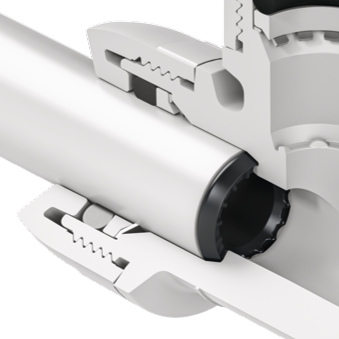
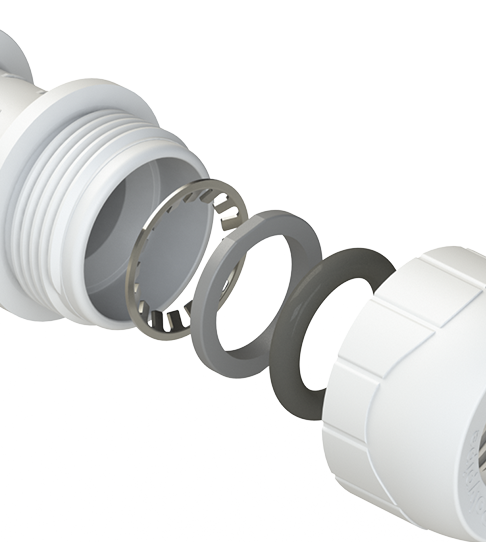
While PolyPlumb® Enhanced fittings are generally reusable, there’s one important exception: the stainless-steel grab ring. When reinstalling the fitting, always use a new grab ring.
1. Remove the cap nut.
2. Carefully pull the pipe out.
3. Cut off the grab ring with side cutters.
4. Peel the grab ring from the pipe.
5. Insert a new grab ring into the fitting.
6. Reassemble as needed.
Important: If the pipe has any scores or scratches, cut it back to a clean section before reinstallation.
When jointing PolyPlumb® Enhanced, what are the insertion depths?
+
Installing PolyPlumb® Enhanced fittings is as easy as installing the original PolyPlumb® fittings. Follow these simple steps:
1. Locate the ‘K’ mark on the pipe and cut it precisely at that point.
2. Carefully examine the cut end of the pipe for any scratches or imperfections.
3. Place the In-Cert® pipe stiffener into the cut end of the pipe.
4. Gently push the pipe into the fitting until it reaches the next ‘K’ mark.
5.Give the pipe a slight push and twist to ensure a secure fit. If using an In-Cert® pipe stiffener, you will feel the ‘haptic click’.
6.You have made the joint successfully.
That’s it! Your PolyPlumb® Enhanced fitting is now securely installed.
Should you insulate plastic pipes and fittings as you would copper?
+
Plastic pipes, like copper pipes, can freeze. While they are more resistant to freezing than copper, they can still be affected. Frozen water expands, potentially causing plastic pipes to stretch. To prevent this and ensure a reliable water supply, it’s crucial to insulate plastic pipes and fittings in the same ways you would copper..
Should you lubricate plastic plumbing fittings?
+
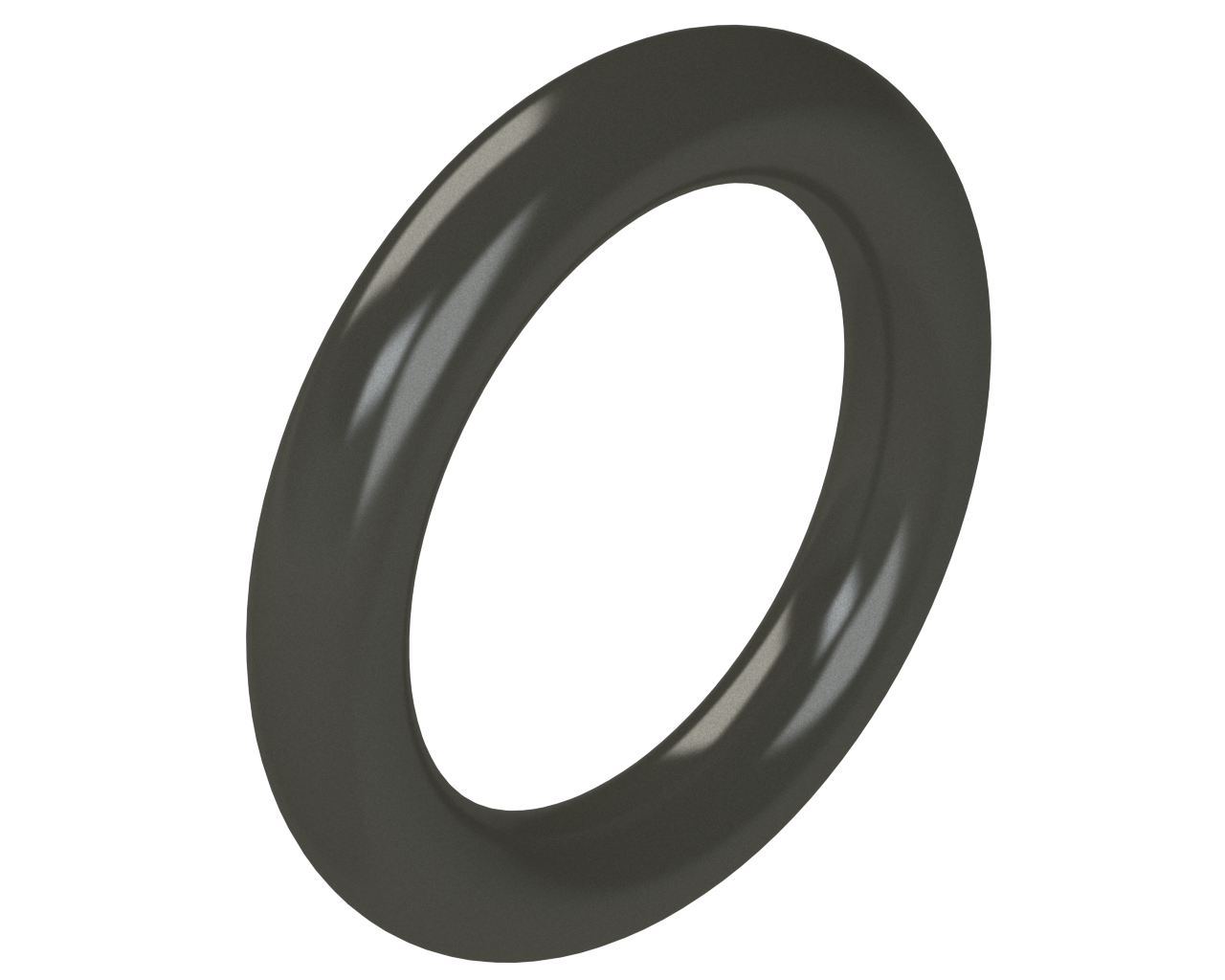
No. PolyPlumb® Enhanced fittings come pre-lubricated straight from the factory. If you disassemble the joint and think the ‘O’ ring is dry, you can re-lubricate it with a WRAS approved aerosol lubricant.
Can you use plastic plumbing in hard and soft water areas?
+
PolyPlumb®® Enhanced fittings and Pro-Straight® pipe, made with polybutylene, are perfect for both hard and soft water regions. Polybutylene’s inertness to chemical reactions means it resists scale buildup and corrosion, ensuring a long-lasting and efficient plumbing system. Unlike other materials, PolyPlumb® Enhanced is unaffected by water quality, making it a reliable choice for any environment.
Is polybutylene pipe compatible with compression fittings?
+
Yes, polybutylene pipe can be used with compression fittings. However, it’s essential to follow a few guidelines for a secure installation. When installing polybutylene pipe with compression fittings, use a pipe stiffener to ensure the pipe maintains its shape and prevents it from collapsing under the pressure of the fitting. For optimal compression and a reliable seal, we recommend using copper olives instead of brass. Copper is a softer metal, which allows for better compression and a more secure fit.